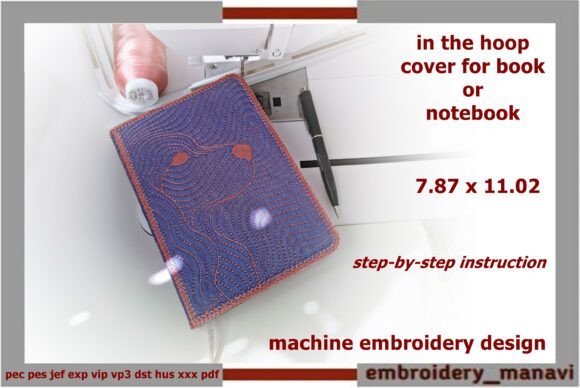
A Graceful Spaniel Embroidery Book Cover Design Review
As an embroidery designer preparing for a weekend craft fair, my first task is to evaluate new designs not just for their beauty, but for their real-world selling power. When I look at the Regal Spaniel in-the-Hoop Book Cover, the word "regal" sets a clear tone. This isn't a cartoonish or playful dog design. It feels inherently elegant and premium. That’s a valuable niche in the handmade market. For customers looking for a gift that feels special and refined, or for book lovers wanting to elevate their journal, this design immediately communicates a sense of quiet luxury.
Where This Design Stands Out on the Craft Fair Table
My booth display is a mix of tote bags, aprons, tea towels, and pillow covers. The Regal Spaniel in-the-Hoop Book Cover design wouldn’t be the loudest, boldest piece. Instead, it would be the sophisticated anchor. On a busy table full of color, a well-executed sample of this on a neutral fabric would act as a visual pause—a spot of intricate detail that draws customers in for a closer look. It naturally fits with a "handmade luxury" section of the booth, perhaps alongside other delicate or decorative embroidery files. Its success relies on excellent stitch quality and thoughtful product pairing.
Product Pairing: From Book Covers to Best-Sellers
The description suggests a book, notebook, or journal cover. That’s a fantastic, gift-ready handmade product. But for a craft fair, I always test a design across multiple items to see where it truly shines and sells fastest.
- Tote Bags & Market Bags: A larger version of this spaniel could become a stunning focal point on a linen tote. It feels more artistic than cute, appealing to customers who appreciate craftsmanship.
- Pillow Covers: This is a prime candidate. The elegant theme translates perfectly to home decor. On a throw pillow, it becomes a decorative, premium accent.
- Fabric Pouches & Small Gifts: As a smaller accent on a zipper pouch or glasses case, it maintains its luxurious feel. It’s perfect for batch production as a consistent, high-quality small shop product.
- Tea Towel Embroidery: Here, caution is needed. The dense, likely detailed stitching might fight with the textured surface of a towel. It would require a very sturdy stabilizer and might lose clarity.
- Apron Embroidery: Similar to the towel, an apron’s curved pockets and potential fabric thickness could challenge the design’s finer lines. It might work best as a smaller chest logo.
- Embroidered Patches: This could be a brilliant adaptation. A standalone patch with this graceful spaniel offers versatility. Customers could apply it to their own items. It photographs exceptionally well for Etsy seller listings.
- Caps: Given the curved surface, the design would need significant testing. Small details might pucker. It’s likely not the ideal first application.
The Practical Production Checklist
Turning a digital file into a profitable craft fair product requires a practical eye. Here’s my on-the-ground evaluation for this design.
- First Impression & Clarity: At a glance, the "regal" theme is clear. For online sales, this is gold. It photographs well as a finished product, suggesting handmade quality and higher value. It’s not overly complex to understand, which helps customers make quick decisions at a busy fair.
- Scale & Repeatability: Is it a large focal design or a small accent? Based on the "book cover" premise, it’s likely a medium-to-large focal point. This means it commands attention but also uses more thread and time. For batch production, I’d need to streamline my process—perfecting the hoop placement, stabilizer, and thread sequence to make each unit efficient.
- Stitch Density & Detail: Any design with "graceful" details likely has areas of satin stitch or finer lines. I must test the design on scrap fabric first. Dense stitch areas can cause fabric pull or require specific stabilizers. Tiny details may lose definition on darker fabrics unless thread contrast is perfect. There’s no mention of small lettering, which is a relief—lettering often shrinks poorly.
- Hoop Size & Fabric: The description doesn’t specify a hoop size. Before any production, I must confirm hoop size to know which products are physically possible. A large hoop design limits its use on small pouches; a smaller hoop makes it flexible. I’ll test it on smooth linen first, then on potential problem fabrics like textured towels or thick canvas to see if it holds its elegance.
Critical Notes for Commercial Success
My final review always covers the unseen details that protect my business and boost sales.
- Commercial Licensing: I must confirm commercial licensing before selling finished products. The description calls it a "digital" design. I need to ensure the license explicitly allows for commercial use at craft fairs and in my Etsy shop.
- Creating a Real Mockup: Never rely on a printable mockup alone. I will stitch at least one complete, perfect sample. This real sample is what sells at the fair—it shows texture, thread shine, and true color. It also reveals any hidden production quirks.
- Thread Color & Fabric Choice: For an elegant design, thread contrast is paramount. On light fabric, a rich brown or black spaniel will stand out. On dark fabric, I’ll need a very light, possibly cream or grey, thread palette. I’ll compare fabric colors with my thread inventory to plan my product line.
- Booth Display Strategy: This design enhances brand consistency if my brand leans towards classic, quality craftsmanship. In the booth, I’ll display it prominently on a product that shows its best qualities—likely a pristine pillow cover or a beautiful journal. That visual appeal directly drives buyer engagement and perceived product value.
In conclusion, the Regal Spaniel in-the-Hoop Book Cover embroidery file is a strong contender for the craft fair. It fills a premium, elegant niche within the popular Dogs category. Its success hinges on pairing it with the right products—avoiding textured or difficult surfaces and focusing on smooth, gift-quality items like pillow covers, tote bags, and the intended book covers. With careful testing of stitch density, hoop size, and licensing, this design can become a standout, high-value item that attracts customers looking for more than just a cute motif, but a piece of refined embroidery artistry.