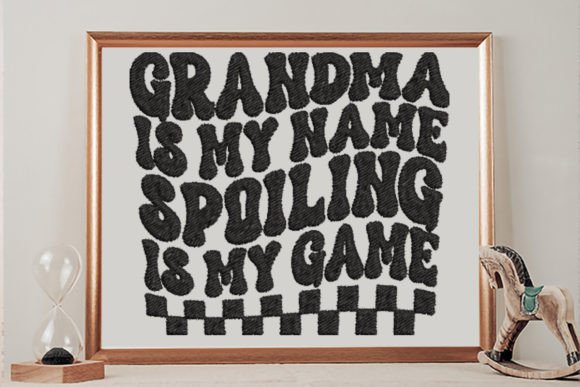
Grandma is My Name, Spoiling is My Game Embroidery Review
First Impressions: Whimsy and Charm for the Homemade Market
When I first considered Grandma is My Name, Spoiling is My Game for my upcoming craft fair booth, my immediate reaction was a smile. The title alone tells a story. This isn't a minimalist or aggressively modern design; it’s pure, relatable whimsy. It feels warm, slightly rustic, and instantly charming—a perfect fit for the handmade product ethos. It promises a touch of personality, which is exactly what customers at fairs are looking for. They want items that feel personal, giftable, and infused with a sense of home.
Where This Design Shines in Your Booth Display
My booth setup includes embroidered tote bags, aprons, tea towels, patches, caps, and pillow covers. Grandma is My Name, Spoiling is My Game has a clear sweet spot. On functional, giftable items like kitchen towels and aprons, it becomes a delightful focal point. Stitched onto a crisp white or soft linen towel, the message feels both decorative and useful—a grandma’s kitchen essential. On a tote bag or a market bag, it elevates a simple carrier into a personalized statement piece, suggesting the bag’s owner (or gift-giver) has a playful, loving spirit.
As a small shop product, its versatility is key. For lower-cost, quick-turn items, consider making it into an embroidered patch. Patches are hugely popular and allow customers to apply the sentiment to their own items. A small fabric pouch or a pillow cover in a cozy, solid color would also be excellent canvases. The design acts as a complete story on these items; customers don't need any explanation. They see it, understand it, and often connect emotionally—which is the fastest path to a sale.
Design Readability and Batch Production
From a production standpoint, the phrase “Grandma is My Name, Spoiling is My Game” is wonderfully clear. It’s readable at a glance, even from a few feet away in a bustling market. This is critical for craft fair product success. A customer walking past your table should get the message instantly. It works beautifully as a medium to large focal design. I would not recommend scaling it down too much for a tiny accent on a cap, for instance, as the lettering could lose clarity.
For batch production, this machine embroidery design appears to be a strong candidate. The description suggests a lovely design, not overly complex graphics. This often translates to reasonable stitch counts and run times, making it efficient to produce multiple tea towel embroidery sets or tote bag designs in a series. Always, however, test first. Run the embroidery file on your machine with the intended hoop size and fabric texture to verify.
Photography and Online Appeal
For your Etsy seller listings or social media, this design photographs very well. The text-based nature means it remains legible in photos. Stitched on a contrasting fabric—like a dark navy bag with bright white thread—it creates a striking, professional-looking image. Creating at least one real mockup is non-negotiable. A photo of a real, stitched towel in your booth lighting is far more compelling than a digital printable mockup. It showcases the actual handmade quality and texture.
Careful-Use Notes for the Embroidery Designer
While the design seems straightforward, a few practical checks will ensure your finished products are impeccable.
- Thread Contrast: On textured towels or thick fabrics like apron canvas, ensure your thread color pops. A pale pink on a light linen might get lost.
- Stitch Density: Check the design’s density, especially if the “lovely” embellishment includes decorative elements. Very dense areas on curved cap surfaces or lightweight pouches might require careful stabilizer choice.
- Small Lettering: If the design includes any tiny script or details within the “whimsy and charm,” test it at your intended size. It might not translate well to a small patch.
- Dark Fabric: Embroidering on dark materials requires perfect tension and possibly a lighter underlay to prevent the fabric shadowing through the text.
Always test on scrap fabric first. Review the spacing and alignment. Confirm the commercial licensing of the digital embroidery file before selling any products. The description notes it “comes with mu”—likely indicating multiple file formats or usage terms. You must clarify this with the designer before any commercial embroidery.
The Big Picture: Booth Impact and Customer Engagement
Ultimately, Grandma is My Name, Spoiling is My Game isn’t just an embroidery file; it’s a product concept. In your booth, it strengthens your display by offering a clear, emotional niche: Grandparents and family love. It adds product value because the sentiment makes the item feel like a thoughtful gift, not just a utilitarian object.
It encourages buyer engagement. Customers might point it out to a friend, laugh, and say, “That’s my mom!” That moment of connection is gold. For brand consistency, if your shop focuses on warm, humorous, or home-centric designs, this fits seamlessly. It looks good in person because it’s honest—it’s not trying to be anything other than a sweet, charming declaration.
For the creative entrepreneur preparing for a weekend market, this design represents a low-risk, high-appeal opportunity. It’s easy to understand, versatile across multiple products, and taps into a universally affectionate theme. By focusing on quality execution—the right fabric, crisp stitching, and thoughtful presentation—you can transform Grandma is My Name, Spoiling is My Game from a digital asset into a standout, sellable handmade product that captures both whimsy and the heart of the handmade market.