Celestial Lotus Embroidery: A Craft Fair Designer's Review
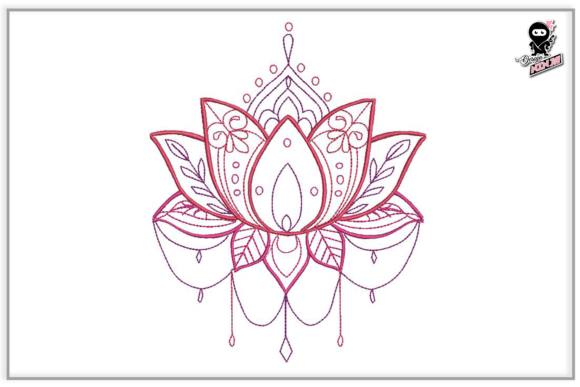
As someone who prepares a booth for weekend markets, my first question about any new embroidery design is: will it sell in person? When I loaded the Celestial Lotus Embroidery file, my initial impression was clear: this is an elegant, decorative outline. It doesn’t scream rustic or farmhouse, nor is it overly minimal. It feels premium and soft, with a celestial touch that suggests something a little special, a little dreamy. That mood is a strong starting point for handmade products.
Where This Design Stands Out on the Sales Table
Imagining my typical display—tote bags, aprons, tea towels, caps, small pouches, and pillow covers—I immediately see several winners for the Celestial Lotus Embroidery. Its outline style means it won’t get lost on textured surfaces like kitchen towels or market bags. On a crisp white tea towel or a natural linen apron, this design would look intentional and refined, elevating a simple item into a giftable piece. For a boutique maker, that translation from everyday to elegant is key.
On a tote bag, it could serve as a beautiful focal point, especially if placed centrally. For caps, the curved surface demands a design that isn’t too dense, and an outline flower like this often adapts well, provided the stabilizer is right. One of its strongest applications, however, might be as an embroidered patch. The clean lines would make it easy to apply to various items, offering versatility that customers at a craft fair love.
Practical Production for the Busy Maker
From a production standpoint, evaluating an embroidery file like Celestial Lotus Embroidery for batch work is crucial. Outline flowers typically have moderate stitch density, which is a relief. High-density areas can slow production and strain machines when you're making dozens of items. This seems like a design you could run reliably on a series of pillow covers or fabric pouches without constant thread changes or excessive wear.
A major consideration is scale. How does it look at a smaller size for an accent on a pouch, versus a larger size as the main feature on a pillow? Without knowing the exact hoop size parameters from the designer, I would strongly advise testing this on scrap fabric at both scales. Some outline designs lose their celestial, delicate feel when minimized, becoming just a clump of lines. Conversely, enlarging it might reveal if spacing between elements is sufficient to keep it looking clean and intentional.
Critical Notes on Fabric and Presentation
Thread contrast is everything. This design would likely shine on light fabrics—creams, light blues, soft grays—enhancing that celestial mood. On dark fabric, like a black cap or a deep navy tote, you would need to choose a bright, possibly metallic thread to maintain the design's luminosity and ensure it pops from a distance in your booth. Always test on the actual fabric colors you plan to use.
Photographing products with this design for Etsy listings or printable mockups should be straightforward. The clear outline will be recognizable even in small online images, which is vital for digital sellers. It communicates "handmade quality" without looking chaotic. For booth display strength, creating at least one real, finished mockup—a tote bag or a pillow cover—is non-negotiable. It lets you see how the light hits the stitches and how customers might notice it as they walk by.
The Selling Power: Customer Attention and Value
A design like Celestial Lotus Embroidery affects buyer engagement by telling a subtle story. It’s not just a flower; it’s a "celestial" lotus. That implies uniqueness, tranquility, and beauty. You can leverage that in your product descriptions and booth talk. It adds perceived value, allowing you to position the item as more than just a functional apron or bag, but as a piece of art.
For brand consistency, if your small shop product line leans towards elegant, nature-inspired, or spiritual themes, this embroidery file would integrate seamlessly. It helps craft a cohesive booth look, rather than a table of random motifs. Customers remember a curated collection.
Final Designer Checks Before the Fair
Before committing to a production run for craft fair products, my final checklist always includes:
- Run the machine embroidery design on scrap fabric identical to your product fabric.
- Check thread contrast for both light and dark background options.
- Review the design's spacing at your intended hoop size to ensure no overly tight areas.
- Inspect stitch density on a textured towel or a curved cap surface to confirm clarity.
- Use the correct stabilizer for each fabric type; a linen tote bag needs different support than a cotton cap.
- Compare how it looks on at least three different product types—for example, a tea towel embroidery, an embroidered patch, and a pillow cover.
- Most importantly, confirm the commercial licensing terms for the digital embroidery file. Never assume you can sell finished products without verifying this.
Celestial Lotus Embroidery, from the point of view of an experienced embroidery designer preparing for a market, holds substantial promise. It fits the decorative, premium niche that attracts buyers looking for special gifts. Its outline flower construction suggests good production efficiency. By applying it thoughtfully to products where its elegance is maximized—like linen items, light-colored totes, and standalone patches—you can create a compelling, sellable line that stands out in a busy craft fair environment.